Zscaler CEO: The market is totally irrational
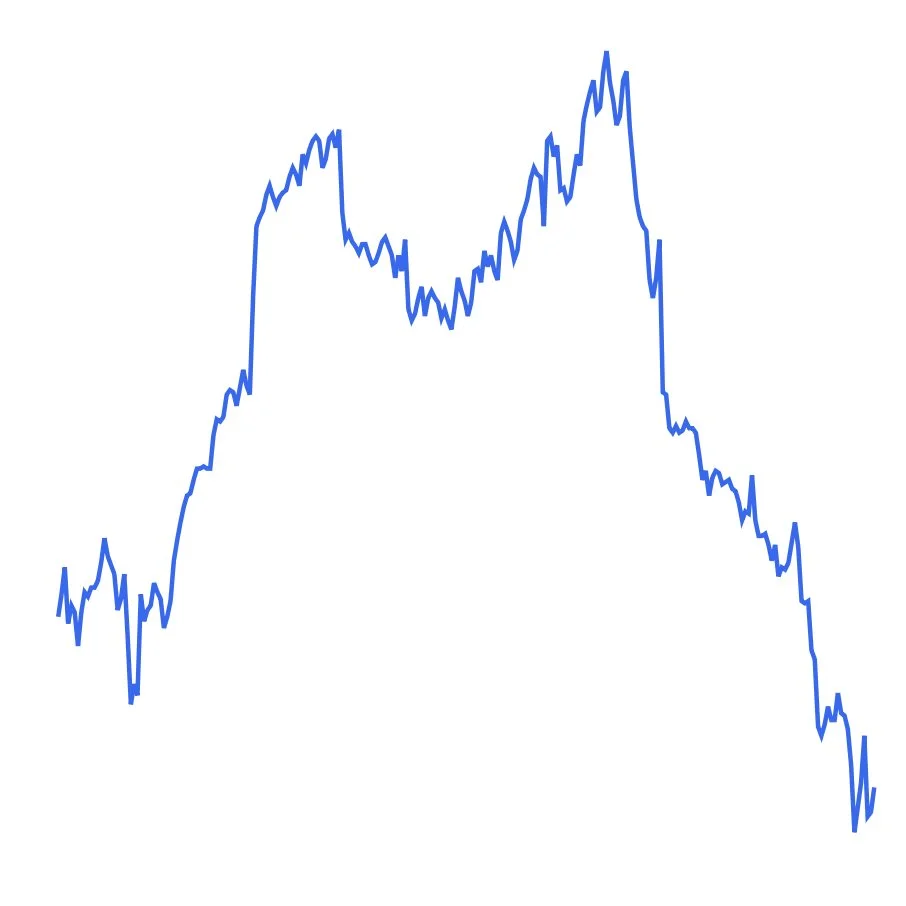
ZS, $154.67, is down 31% this year and down 20% in twelve months.
Who knew a Substack could do so much damage to perfectly good software companies. Jay Chaudhry, founder and CEO of Zscaler, pushes back on the madness of the current investment climate, the “AI will destroy everything” mindset; explains what people fundamentally misunderstand about his business model; and emphasizes his stock is “crazy low.”
This article was originally published March 3rd for TL subscribers. For more articles like this, consider subscribing.
I talked on Friday with Jay Chaudhry, CEO of cyber-security firm Zscaler, and I had come prepared to talk about the sorry state of software investing. I was ready, too, to dig into the threat of Anthropic making cyber-security obsolete.
Chaudhry stole my thunder, however.
“The market is totally irrational,” he says when I ask what is on his mind lately.
He then goes through a list of the things that are misunderstood.
“The Citrini report probably lost how many hundreds of billions of dollars worth of market cap — it is unbelievable,” he says, referring to the widely-circulated essay by investment house Citrini Research that had been published on its Substack on February 22nd. The essay is a fictional letter from 2028 in which AI has destroyed most jobs and prompted broad economic malaise.
Chaudhry’s broad push-back against that report is that replacing software built over decades with AI is not so easy.
“I had a call with the board of directors of a very large bank last night out of Asia-Pac, and they told me, We are not touching our core banking application” with AI, Chaudhry relates.
UNDERSTAND OUR SOFTWARE
Chaudhry sees his own software similarly immune to threats of “vibe-coded” apps. Part of his struggle as a chief is to get across to investors just how irreplaceable his programs are — the responsibilities of cyber-security that he told me in 2023 are “not trivial.”
The week before we spoke, Anthropic, the AI startup that makes the “Claude” family of “large language models,” had revealed its first offering for computer security. Cyber-security stocks, including Zscaler’s, fell hard on the threat of being replaced by AI.
Chaudhry doesn’t see it that way. “You can have a human resources system where “good enough” is good enough,” he observes. “But having a security system that is good enough is not good enough.”

While Anthropic may dip a toe into the cyber-security market, “there’s room for security vendors who have expertise, and specialize in it,” says Chaudhry. Anthropic and other amateurs will just never be good enough. “You can have a human resources system where “good enough” is good enough,” he observes. “But having a security system that is good enough is not good enough.”
See also:
Zscaler CEO: ‘These things are not trivial’, December 26th, 2023;
Zscaler CEO Chaudhry: disrupting the old guard is a mega-opportunity, June 17th, 2023.
Zscaler’s software functions as a kind of inquisitor, inquiring, for every action by an employee’s computer, whether they are authorized or not to take a given action, such as visiting a Web site. It is a form of security known as “zero trust” that requires constantly inspecting activity that is broadly distributed.
“We are not an application,” says Chaudhry. “We are a distributed exchange sitting around the globe that processes a request, and, in zero-trust fashion, either connects an application or doesn’t.
“Try to imagine Claude Code writing a distributed system for inline inspection of traffic and detecting any cyber issues!” Not going to happen, is his point.
While Anthropic may dip a toe, “there’s room for security vendors who have expertise, and specialize in it,” such as his firm.
Also on Chaudhry’s list of irrational preoccupations is the threat that there will be no workers left at companies to use his software.
The same day Zscaler reported results, Block founder Jack Dorsey announced that he was axing forty percent of his staff, four thousand people, as “Intelligence tools,” the term Dorsey used, can do the work of a lot of people.
“It was a shocker,” says Chaudhry of Dorsey’s move. And it looked really bad for Zscaler because some of Chaudhry’s software is priced based on how many “seats” he sells to a company. “The first question was, If employees become half, what are you going to do about it?” Chaudhry says of the Street’s reaction. Zscaler stock sold off twelve percent the next day.
Chaudhry emphasizes that his software is not entirely priced based on seats. “We have many use-cases that are linked to traffic, not to seats,” he tells me. That includes securing traffic on WiFi networks of guests connecting to the network; securing third-party contractors working at a company; securing supply chain partners; and mining a company’s data to assess the state of security, also linked to amounts of traffic on a network, not to seats.
ARE AI AGENTS REALLY AN OPPORTUNITY?
If I had to sum up Chaudhry’s key points, the value of Zscaler’s products is in the special ability to manage a complex distributed network that cannot be easily replaced by AI, and that is not explicitly tied to seat licenses. That all makes sense.
I did push back on Chaudhry about one point. The flip side of AI disruption, to his mind, is the opportunity he sees to police the “agents” that are being built to replace human workers. Agents are programs that connect to external resources such as databases, and automatically carry out actions such as reconciling accounts or updating records.
“The next biggest opportunity we have is what we call securing AI agents with zero trust,” he says. “An agent can do a lot of damage, far worse than employees.”
That is a familiar refrain of most software chiefs these days, the expectation they will make money facilitating the deployment of agents. The same point was made to me this week by the head of software and services firm Innodata.
The problem, from my perspective, is that agents don’t work right. It’s not just that they’re potentially dangerous, as Chaudhry points out. They’re broken. As I’ve chronicled in articles for ZDNet, there are some very profound problems with agentic AI, problems that I suspect will seriously hamper their deployment.
The biggest weakness with the Citrini report is its author’s confidence that agentic technology will quickly accomplish a lot, a prediction I think is unrealistic.
Chaudhry is more optimistic than I am. He concedes “these consumer-focused AI agents are a mess,” alluding to OpenAI’s ChatGPT doing your shopping, for example. But, the enterprise-grade stuff will work out okay, he thinks, because they will be well-defined and well-managed.
“The more narrow the task and role is, the more controls you can put on it, okay?” Chaudhry explains. “And enterprise CIOs and CSOs would rather have well-defined areas for agents to do their job rather than too broad of the agents where they try to do everything. I think the success will come from, focused enterprise agents, and they'll get embraced.”
Even the weaknesses of agentic technology are an opportunity, he maintains. Agents are “immature today,” and, “may take a few quarters to get mature,” he says, “but the less mature they are, the more they need us.”
THE STOCK
The market may be irrational, but former Berkshire CEO Warren Buffett has remarked that the market can remain irrational longer than you can remain solvent. The corollary to that is that stock prices can remain under pressure longer than you can afford to stomach losses.
Chaudhry’s stock has suffered along with the rest of software despite healthy sales growth. Since we last spoke, in December of 2023, Zscaler stock is down 31% at a recent $154.67. The shares are being valued at either thirty-two times projected earnings per share for the fiscal year that ends in July, or 6.8 times projected revenue.
Is that a good stock buy?
“It’s crazy low,” is Chaudhry’s reply. “It’s an opportunity for long-term investors.”
Before we part, Chaudhry gives me his thousand-foot view on everything he has enumerated. “Look, AI is actually making the need for cybersecurity more and more important, okay? Because it's creating bigger issues.”◆
Disclosure: Tiernan Ray owns no stock in anything that he writes about, and there is no business relationship between Tiernan Ray LLC, the publisher of The Technology Letter, and any of the companies covered. See here for further details.