
OpenAI and the era of self-congratulation
There’s a pattern among AI labs such as OpenAI of feeding the world just the details they want in something that looks like research but really amounts to a press release: no independent verification, no examination of the larger questions, such as, Is all this of any value?
Jensen Huang and The Total System
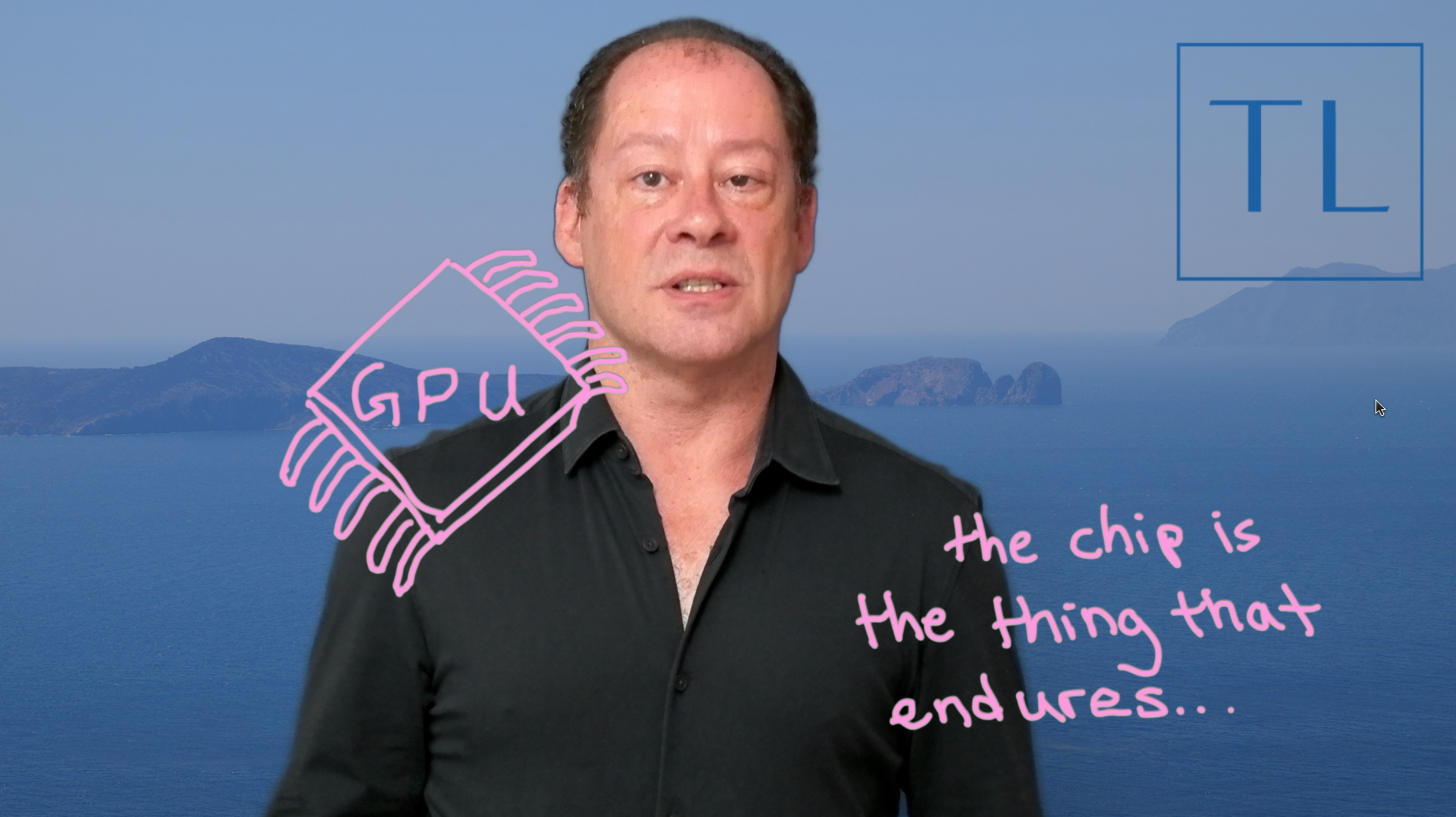
Years ago, Nvidia’s co-founder and CEO outlined what I would call “The Total System,” where computers talk only to computers, with no humans in the loop. It’s one of the reasons I believe he’s looking beyond OpenAI and Anthropic and other AI leaders to the enduring value of chips.

Can we pick winners in AI’s memory obsession?
The current infatuation with artificial intelligence has been fixated on the fastest processors that make AI possible, such as Nvidia’s GPU chips, and competing efforts from Advanced Micro Devices and Intel.
It’s clear, however, that the thing that will make or break AI going forward is memory, specifically, the circuits that hold the data that feeds data-hungry AI.
The speed and the energy efficiency of memory circuits such as DRAM have not kept pace with that of “logic” chips such as GPUs, leading to a disconnect: The faster the chips go, the more that memory is holding everything back.
Is that an investment opportunity? Reason dictates it should be. The problem of how to have really big, really efficient memory is one of the key challenges of the AI age. Herewith, some thoughts on how to play the memory race.
For ASML, AI increases everything
An interesting couple of notes appeared over the transom this week regarding Netherlands chip equipment titan ASML Holding, one of the TL20 stocks worth considering.
There was no immediate news event for these notes, just what appeared to be a spontaneous rush to endorse a good company’s stock.
The theme of the notes, you could say, was, Chip making is only getting harder, and that’s always good news for ASML.
In case you’re unfamiliar, ASML makes laser light sources for what’s known as photolithography, where a light is shown through a mask or screen, imprinting a pattern of circuits on the photosensitive layers of a semiconductor wafer such as silicon. That’s how circuits are carved into the wafer to become chips.